Having Anti-lock Brakes on Only the Tractor: A Deeper Dive into Partial ABS Systems
This guide examines partial anti-lock braking systems (ABS) in commercial vehicles, specifically focusing on systems equipped only on the tractor unit. We will analyze its functionality, compare it to full ABS and other partial configurations, and explore safety implications, regulatory compliance, and actionable recommendations for operators, regulators, and manufacturers. This analysis will emphasize the limitations of partial ABS while highlighting its advantages over no ABS at all.
How Tractor-Only ABS Works: A Simple Explanation
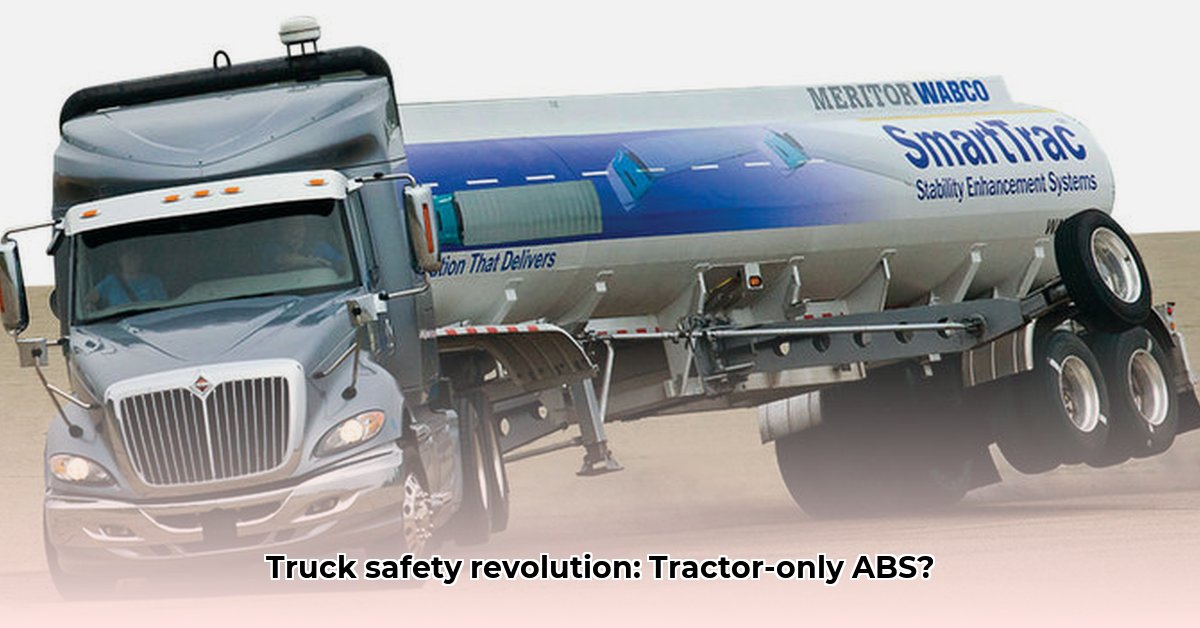
A partial ABS system, fitted only to the tractor (the towing unit), utilizes ABS technology on the tractor's wheels, preventing wheel lockup during braking. In contrast to conventional braking systems, where wheel lockup can lead to skids and loss of steering control, ABS maintains wheel rotation, allowing for continued steering input. This enhances control, especially in slippery conditions. However, the lack of ABS on the trailer means its wheels can potentially lock up, leading to instability and increased risk of jackknifing (the trailer swinging out sideways).
Comparing Partial ABS Configurations: Tractor vs. Trailer
The effectiveness of partial ABS varies considerably depending on whether the ABS is fitted to the tractor or the trailer. A tractor-only setup prioritizes steering control, as maintaining wheel rotation on the steering axle (usually located on the tractor) allows the driver to better maneuver the vehicle during braking. However, a lack of ABS on the trailer introduces a significant risk of jackknifing. Conversely, a trailer-only setup improves trailer stability during braking, but potentially compromises the steering control in the tractor; should the tractor wheels lock up unexpectedly, maintaining control of the vehicle becomes considerably more difficult. Both configurations offer advantages and disadvantages, clearly illustrating the superiority of a full ABS system where all wheels are equipped with ABS.
Safety Implications and Risk Mitigation
Partial ABS systems, while offering some safety benefits over no ABS, do not eliminate the risk of accidents. Even with tractor-only ABS, events such as jackknifing, loss of steering control, and increased stopping distances remain significant concerns, particularly in adverse weather conditions or with heavier loads. To mitigate these risks, comprehensive driver training programs focusing on braking techniques and hazard recognition under partial ABS conditions are essential. Regular vehicle maintenance, especially inspections of ABS components, is also crucial for preventing system failures that can exacerbate these risks.
Navigating Regulations: A Patchwork of Laws
Regulations regarding ABS vary considerably across different jurisdictions. Some regions mandate full ABS systems on all heavy vehicles, while others may permit partial ABS, or have no requirements. Operators must familiarize themselves with the specific regulations of their operating areas to ensure compliance and avoid penalties. The lack of standardization in such regulations creates inconsistencies in safety standards across different regions.
Recommendations for Vehicle Operators, Regulators, and Manufacturers
Addressing the safety challenges presented by partial ABS requires a multi-faceted approach involving various stakeholders.
For Operators: Invest in thorough driver training programs emphasizing safe driving practices, especially emergency braking techniques, under partial ABS limitations. Prioritize regular maintenance checks of the braking system and consider upgrading to full ABS whenever feasible given the higher safety profile provided by this system.
For Regulators: Conduct further research to quantify and compare the safety benefits of full ABS against partial systems. Consider standardizing regulations to incentivize the adoption of full ABS systems across all jurisdictions. This should include further study into the real-world efficacy of partial systems and the specific risks they introduce.
For Manufacturers: Develop and market cost-effective options for full ABS systems in commercial vehicles, making this safer technology more accessible to a wider range of operators. Continued innovation in ABS technology should explore methods of improving cost-effectiveness, reliability, and safety performance.
Conclusion: Prioritizing Full ABS for Enhanced Safety
While partial ABS systems offer some safety advantages over no ABS, it's crucial to understand and acknowledge their limitations. A full ABS system, equipping all wheels with anti-lock brakes, remains the gold standard for heavy vehicle safety, providing superior control and significantly reducing the risk of accidents. The concerted efforts of operators, regulators, and manufacturers are essential in promoting the wider adoption of full ABS, contributing to safer roads for all.